Cart
0
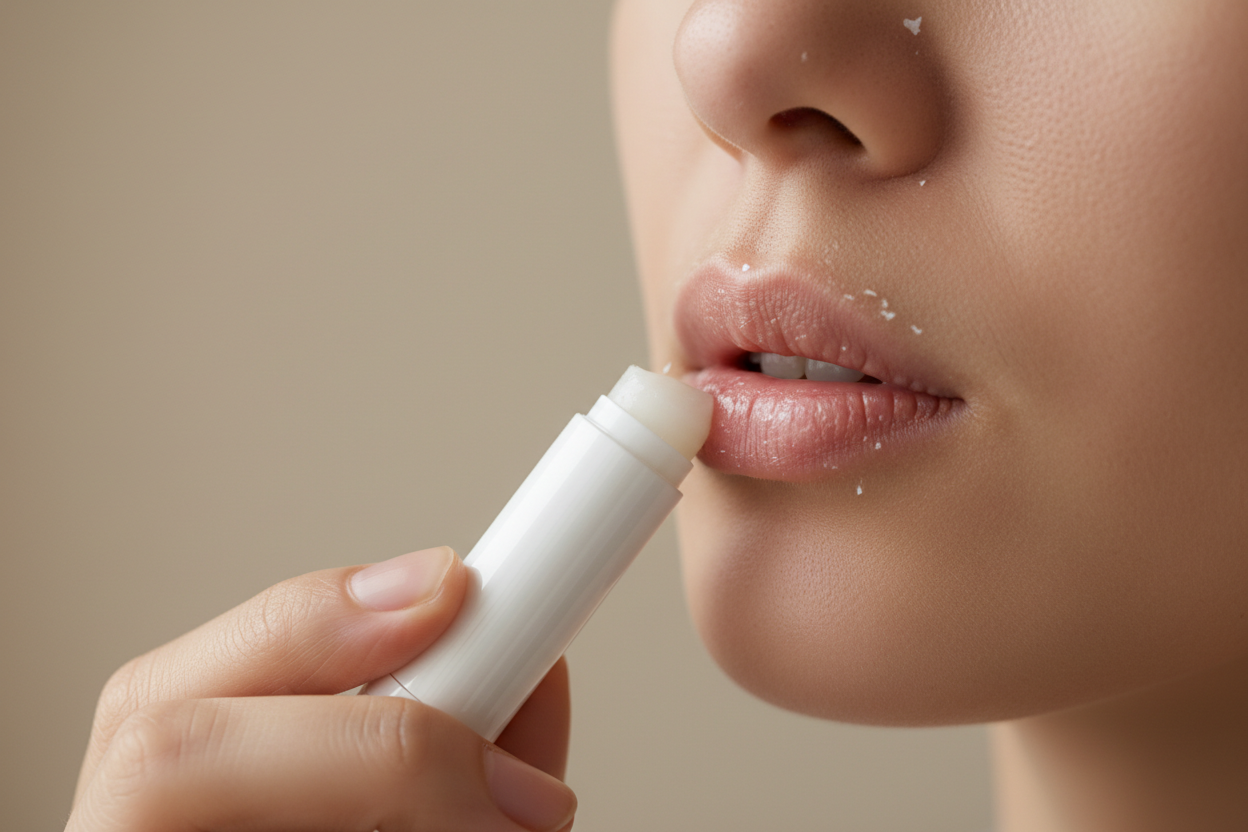
Your Lips Feel Dry Again… Just Minutes After Lip Balm?
You apply lip balm.
For a moment, your lips feel smooth, maybe even glossy.
And then — within minutes — the dryness is back.
So you reapply. Again. And again.
If this feels familiar, you’re not alone. And more importantly, you’re not doing anything wrong.
The problem isn’t that your lips need more balm.
The problem is that most lip balms don’t actually treat dryness — they just temporarily hide it.
At first glance, this sounds surprising. Lip balm is supposed to fix dry lips, right?
But in reality, many lip balms are designed to coat the surface, not repair what’s happening underneath.
To truly understand why your lips stay dry, we need to look deeper — at something most people overlook:
Your lip barrier.

The Real Issue: Your Lip Barrier Is Damaged
Your lips don’t have the same protective structure as the rest of your skin.
They lack oil glands.
They’re thinner.
They lose moisture faster.
This makes them more vulnerable to:
• Dehydration
• Environmental stress
• Heat and sun exposure
• Repeated friction
When your lip barrier becomes compromised, tiny cracks form on the surface. These are often invisible, but they’re the reason your lips feel:
• Tight
• Flaky
• Rough
• Sensitive
Once this barrier is damaged, your lips can’t retain moisture properly.
So even if you apply balm, the hydration doesn’t stay — it escapes quickly, leaving your lips dry again.
Why Most Lip Balms Don’t Actually Help
Most lip balms are built around occlusives — ingredients that sit on top of the skin and create a protective layer.
This layer can:
• Reduce immediate dryness
• Add shine or smoothness
• Temporarily prevent moisture loss
But here’s the catch:
👉 They don’t repair the underlying damage.
So while your lips may feel better for a few minutes, the barrier underneath remains compromised.
This creates a cycle:
Apply balm → temporary relief → dryness returns → reapply
Over time, this can make it feel like your lips are “dependent” on lip balm — when in reality, they just haven’t been properly repaired.
Dry Lips Are Not Just a Hydration Problem
We often assume dryness equals lack of water.
But with lips, dryness is more complex.
It’s usually a combination of:
• Barrier damage
• Moisture loss (transepidermal water loss)
• Environmental exposure
• Habit-related irritation
That’s why simply adding hydration isn’t enough.
Your lips need three things:
1. Repair
Micro-cracks in the lip surface need to heal. Without repair, hydration won’t stay.
2. Moisture Retention
Hydration needs to be held within the lips — not just applied on top.
3. Protection
Your lips need a barrier that prevents water loss and shields against external stress.
Without all three, dryness becomes a cycle instead of a condition.
Everyday Habits That Keep Your Lips Dry
Sometimes, it’s not just products — it’s habits.
Many common behaviours unknowingly damage the lip barrier.
Lip Licking
It feels like quick relief. But saliva evaporates quickly, taking moisture with it.
This leaves your lips even drier than before.
Matte Lipsticks
Long-wear matte formulas often strip natural moisture from the lips.
Frequent use without proper care can weaken the lip barrier over time.
Overuse of Lip Balm
Constant reapplication without repair-focused ingredients can create a surface dependency without solving the root issue.
Sun Exposure
Lips are highly sensitive to UV damage, which can worsen dryness and lead to pigmentation.
What Actually Works: A Barrier-First Approach
To truly heal dry lips, the focus needs to shift.
Not from balm to no balm — but from coating to repairing.
Barrier-focused lip care works differently.
Instead of just sitting on the surface, it:
• Supports skin regeneration
• Strengthens the lip barrier
• Helps retain moisture over time
This leads to long-lasting softness, not temporary smoothness.
What to Look for in a Lip Repair Routine
If your goal is to move beyond constant dryness, your lip care should include:
Barrier-Repair Ingredients
Look for ingredients that actively support healing, such as:
• Ceramides
• Panthenol (Vitamin B5)
• Natural soothing extracts
• Fatty acids
These help rebuild the lip barrier from within.
Deep Hydration
Hydrating ingredients like hyaluronic acid help draw moisture into the lips.
But hydration should always be paired with barrier support — otherwise, it won’t last.
Overnight Lip Care
Nighttime is when your skin naturally repairs itself.
Using a lip mask or treatment at night allows ingredients to work deeply without interruption.
This is often the missing step in most routines.
Why Night Care Makes a Real Difference
During the day, your lips are constantly exposed to:
• Talking
• Eating
• Sun exposure
• Environmental stress
At night, your lips are still.
This gives repair-focused products time to:
• Heal micro-cracks
• Restore softness
• Improve texture
Many people notice that when they switch from daytime-only balm to night repair routines, their lips feel significantly healthier within days.
The Visible Difference of Healthy Lips
When your lip barrier is healthy, the difference is noticeable.
Not just in how your lips feel — but how they look.
Healthy lips appear:
• Naturally smoother
• Softer in texture
• Slightly fuller due to better hydration
• Even-toned and less flaky
This is the kind of result that doesn’t fade within minutes.
It lasts.
The From Negative Approach to Lip Care
At From Negative, lip care is not treated as a quick fix.
It’s treated as skin care for your lips.
The focus is on:
• Repairing the lip barrier
• Supporting long-term hydration
• Avoiding harsh or drying ingredients
Because true hydration isn’t about how often you apply something —
it’s about how well your skin can hold onto it.
Final Thoughts
If your lips keep feeling dry no matter how much balm you apply, it’s not a failure of effort.
It’s simply the wrong approach.
Dry lips don’t need more layers.
They need better support.
Once you shift from surface hydration to barrier repair, everything changes.
Your lips stop feeling like a problem that needs constant fixing —
and start feeling like healthy skin again.